
Marketing is about building and maintaining long-term relationships with customers and increasing brand awareness.
In most industries, this is straightforward. But healthcare marketing is different.
It’s about people helping people. It involves real human emotions, concerns, and trust. That’s what makes healthcare marketing unique compared to other industries.
Why Healthcare Marketing is Different
1. Strict Rules and Regulations
Healthcare marketing has to follow very strict laws. For example, in the U.S., HIPAA limits how patient data can be used for marketing. This is much stricter than industries like retail, where customer data is used more freely for ads and targeting.
2. Ethics are Very Important
In healthcare, trust matters a lot. You cannot use a patient’s photo or video without their clear permission. Marketing must always be honest, respectful, and responsible. It’s not just about selling services—it’s about helping people and doing what is right.
3. Focus is on the Patient
Doctors can use marketing to reach more people, but they should not directly “sell” their services. Instead, the focus should be on understanding patients, explaining clearly, and building trust through helpful and empathetic communication.
4. Clear and Accurate Information is Essential
Healthcare content must always be simple, correct, and educational. The goal is not just promotion—it’s to become a trusted source of information that helps patients make better decisions about their health.
5. Personalisation Must Be Careful
Healthcare deals with real people and their private health concerns. So even if doctors have successful cases, they cannot share them freely without consent. Also, using someone’s search history or personal data to target treatments is often restricted due to privacy laws.
In short, healthcare marketing is not just about promotion—it’s about responsibility, trust, and genuinely helping people.
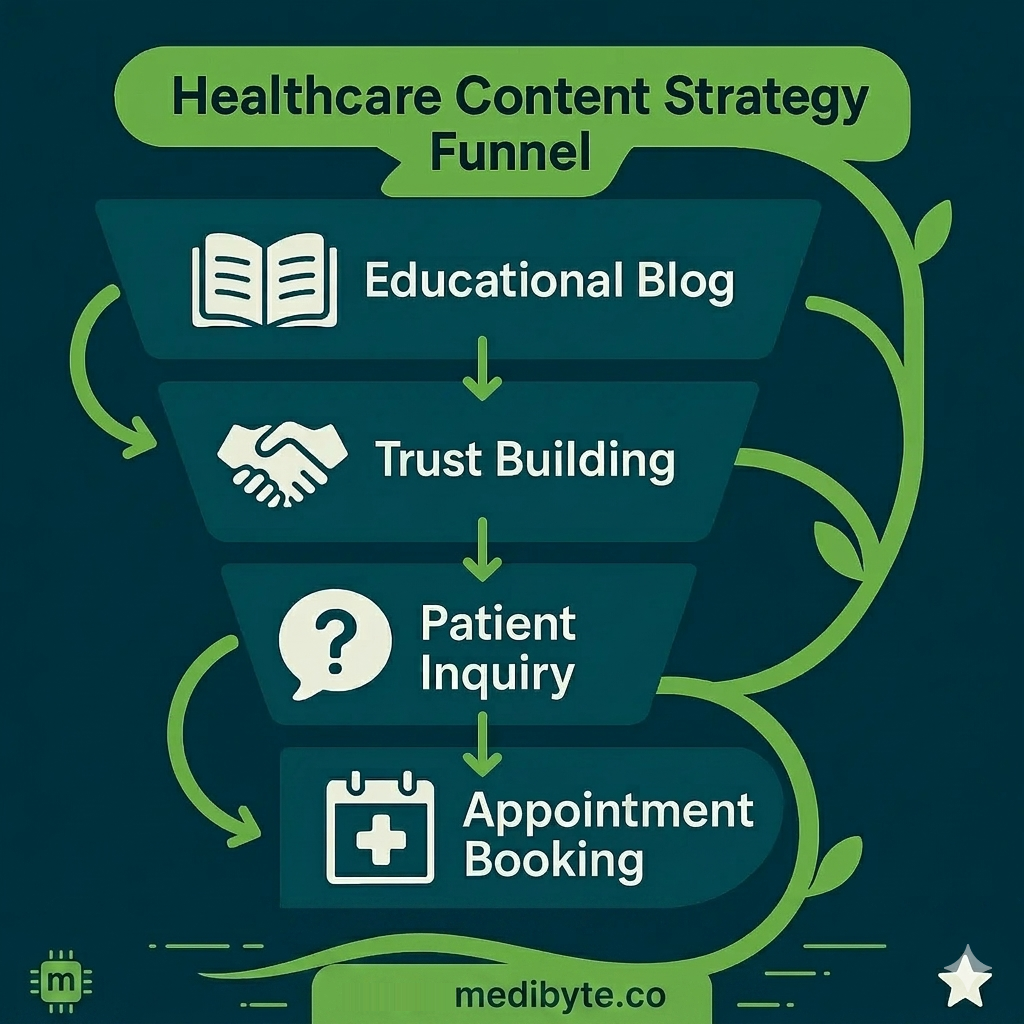
Challenges Healthcare Marketers Face
1. Personalisation is Limited
Healthcare marketers can’t use many of the tracking and targeting methods used in retail or tech. Things like retargeting ads or showing content based on a person’s browsing history are often restricted due to strict privacy laws.
2. Trust is Extremely Important
In healthcare, trust is everything. A small mistake doesn’t just affect sales—it can harm a brand’s reputation or even impact someone’s health. That makes the responsibility much heavier compared to most other industries.
3. Budgets Are Often Tight
Healthcare marketing teams usually have limited budgets like other industries. They also can’t rely on flashy or aggressive advertising. Instead, they need to be smart, creative, and fully compliant to get the best results from what they have.
How Healthcare Marketing Differs from Other Industries
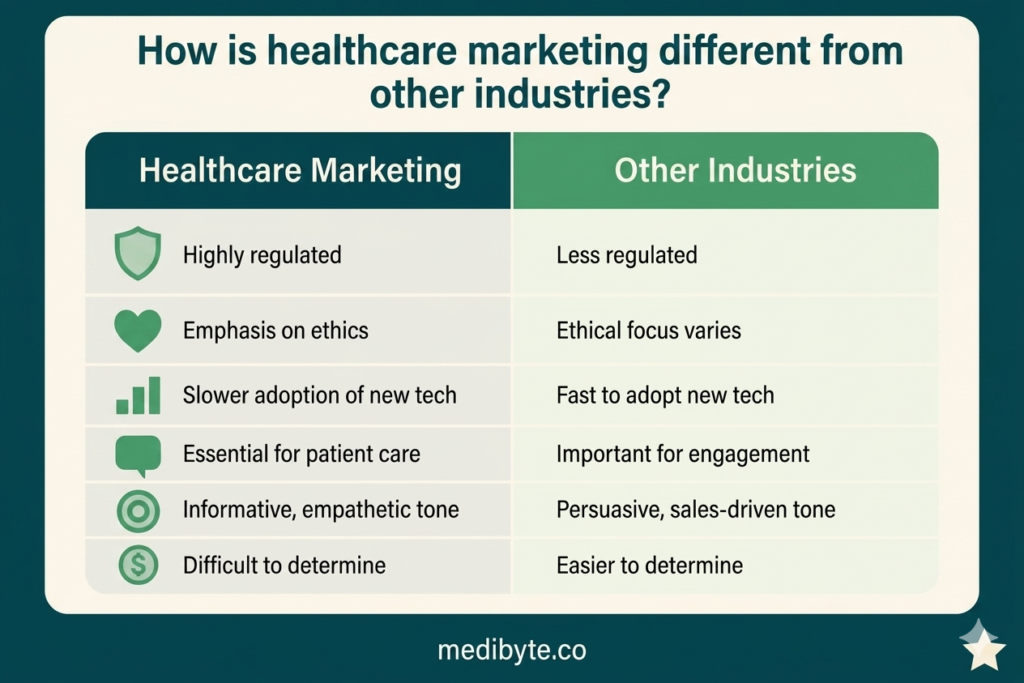
1. Patient-Centred vs Sales-Driven Goals
In most industries, the main focus is increasing sales and growing market share. In healthcare, the priority comes first: patient well-being. Sales and growth come only after ensuring patients are properly cared for and informed.
2. Limited Personalisation
Retail and tech companies use customer data to create highly targeted ads, retarget users, and even personalise pricing based on behaviour. In healthcare, this level of personalisation is heavily restricted due to strict privacy laws. Patient data must be handled very carefully.
3. More Conservative Messaging
Healthcare marketing tends to be more careful and professional in tone. In contrast, industries like retail or tech often use bold, fun, or attention-grabbing ads. Healthcare communication focuses more on trust, clarity, and responsibility.
4. Slower Adoption of New Technology
Many industries quickly adopt tools like AI, chatbots, and automation to improve marketing. In healthcare, new technologies must first pass strict compliance and privacy checks before they can be used, which slows down adoption.
In short, healthcare marketing is more cautious, more regulated, and more focused on people than most other industries.
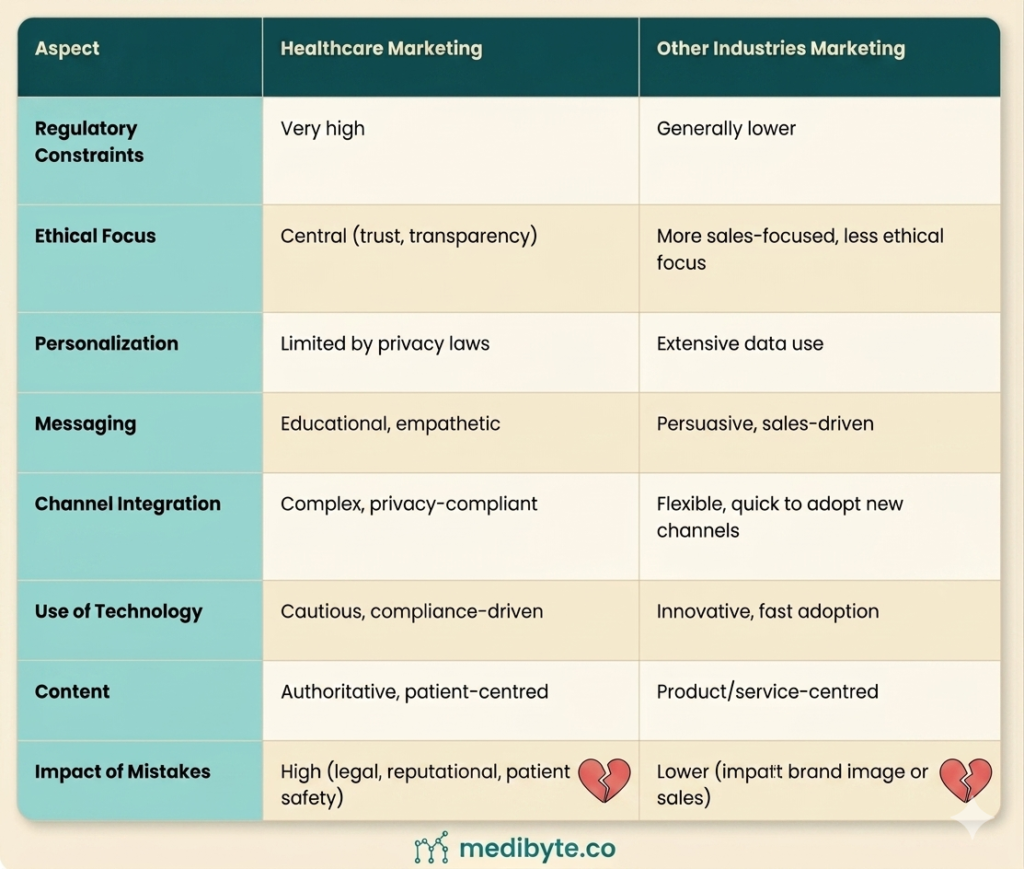
Key Takeaways
Healthcare marketing is different because it must carefully balance patient care, ethics, and legal compliance while still creating real value and impact.
In contrast, many other industries have more freedom to run bold campaigns and use heavy data-driven personalisation. Even though it is still marketing, the approach is not the same. One is focused on products and sales, while healthcare marketing is focused on people first—always putting human well-being at the centre.
FAQs
Because the decisions directly affect people’s health and well-being.
Patients are often vulnerable, careful, and risk-averse, so they need confidence in the provider—not just information or promotions.
Since wrong or misleading communication can have serious consequences, trust becomes the most important factor before anything else.
Healthcare marketing is guided mainly by general advertising rules, medical ethics standards, and oversight from bodies like the Directorate General of Drug Administration (DGDA) and professional medical councils. While the system may not be in detailed, marketers still need to be careful with claims, patient privacy, and medical accuracy.
Healthcare marketing focuses on educating patients to help them make informed health decisions, unlike other industries which mainly aim to promote products.
Messaging must be accurate, honest, and non-misleading because it involves people’s health, while other industries have more flexible, sales-driven communication.
Trust is critical in healthcare since it directly affects patient safety and outcomes, making it more important than in most other sectors.